

HomeWebsites for barristers and specialist lawyers
Websites for barristers and specialist lawyers
Websites for barristers, chambers and specialist lawyers
At the Bar and in specialist practice, clients and instructing solicitors choose a person, not a brand. They want to see who handles their kind of case, how to instruct them and what it is likely to cost. We design websites that put individual expertise first.
- Searchable member and practitioner profiles
- Public access and direct instruction explained clearly
- Bar Standards Board transparency information built in

01 / Who is searching
How barristers and specialist lawyers are found
There are two very different audiences. Solicitors and clerks looking for counsel search by name, seniority and specialism. Members of the public, using public access or looking for a specialist adviser, search by problem: an employment tribunal, a visa refusal, a financial settlement after divorce.
Profiles that read like CVs
Long lists of reported cases mean a lot to a solicitor but little to a lay client. Profiles need a short summary, practice areas and how to instruct.
Unclear routes to instruct
Lay clients often do not know whether they can contact a barrister directly. If the site does not explain public access, they leave.
Specialisms lost in a list
A family or immigration practice competing with large firms needs pages built around specific problems, not one list of practice areas.
02 / Example design
Template preview: Calder Row Legal
We designed this homepage for Calder Row Legal, a fictional specialist practice, to show how a site can lead with people and expertise rather than a long list of services.
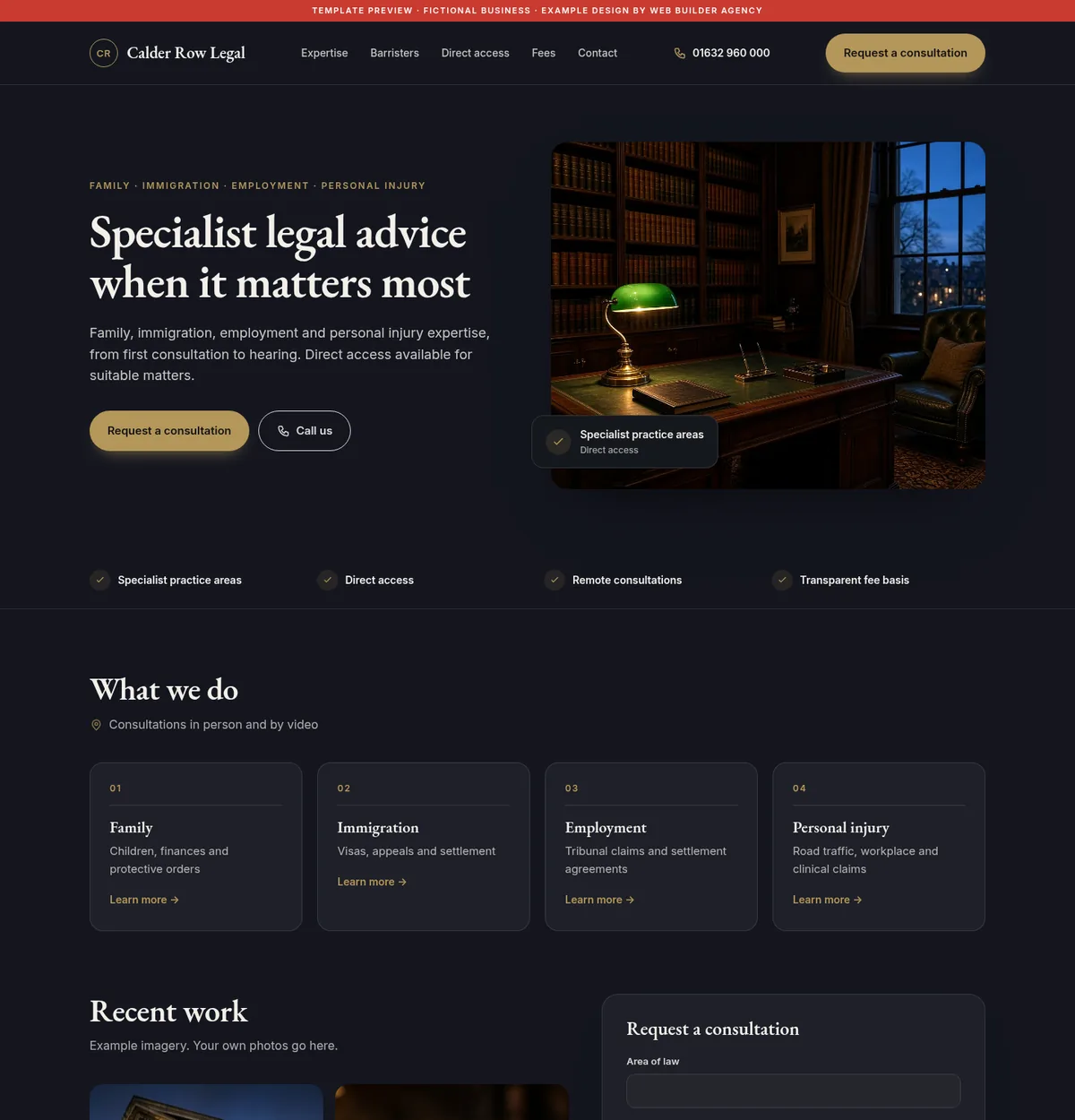
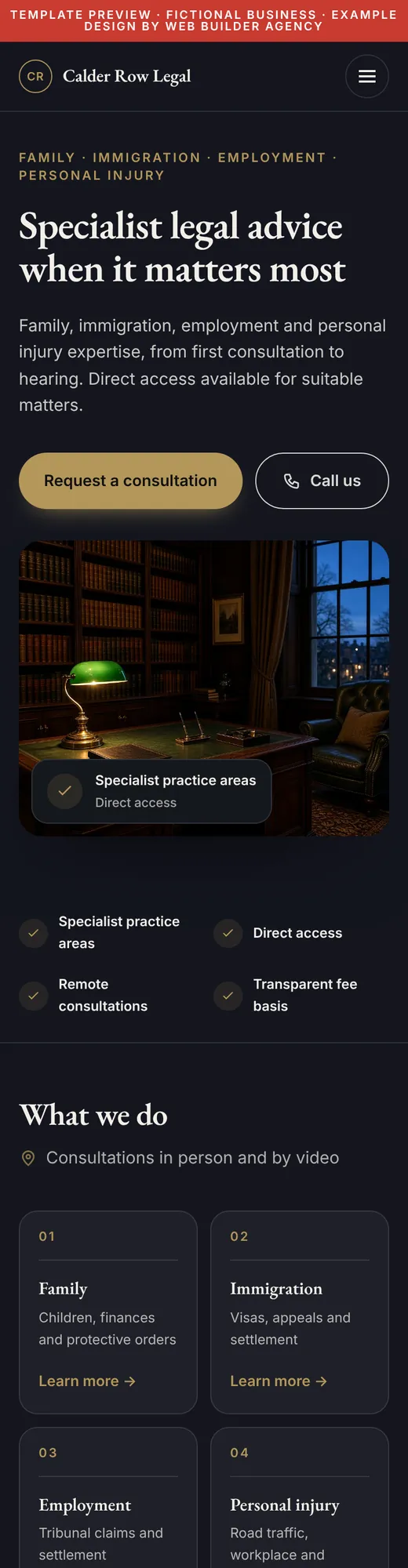
- Practitioner search and specialisms up front
- Clear route for public access enquiries
- Regulatory wording and complaints link in the footer
- Names, fees and reviews are placeholders
03 / Must-have features
Features for chambers and specialist practices
Built around how instructions actually arrive, through clerks, solicitors and, increasingly, directly from the public.
Member directory with filters
Filter by practice area, seniority and call year, with consistent profile layouts that clerks can update themselves.
Public access pages
Which members accept public access work, what it means for the client and how to make an enquiry, linked to the BSB guidance for lay clients.
Clerks’ room contacts
Direct lines and emails for the clerking team by practice group, because that is how most professional instructions arrive.
Fee information that is easy to find
Pricing models, indicative fees and timescales in one place, presented consistently across members.
Problem-led specialist pages
For family, immigration and employment practices: pages about the situations clients are in, such as a tribunal deadline or a spouse visa refusal, with clear next steps.
Articles and case commentary
A simple publishing area for notes on recent judgments and legislative changes, which show expertise and give search engines more to understand.
04 / Regulation
Regulation and transparency points to cover
Who regulates you depends on what you are, so the website has to say clearly who regulates whom.
- All self-employed barristers, chambers and BSB entities must publish on their websites: that clients may contact them for a quotation, contact details, their most common pricing models, main practice areas and services, factors affecting timescales, the correct “regulated by the Bar Standards Board” wording on the homepage, complaints and Legal Ombudsman information, a link to the Legal Ombudsman’s decision data and a link to the Barristers’ Register. BSB transparency rules
- Barristers doing public access work must link to the BSB’s Public Access Guidance for Lay Clients. For certain public access services, including employment tribunal cases, financial disputes after divorce and immigration appeals, they must also publish indicative fees, VAT, likely additional costs, key stages and timescales. BSB: barristers and their fees
- Immigration advisers who are not authorised by a legal regulator must be registered with the Immigration Advice Authority, which replaced the OISC in January 2025. Show your registration and the level you are authorised at. About the IAA
- If your specialist practice is an SRA-regulated firm, the SRA Transparency Rules apply instead. Our websites for solicitors page covers those.
- Enquiry forms for legal problems often attract sensitive details, so we keep them minimal, explain how data is used and avoid asking for case details before a conflict check.
You remain responsible for your regulatory content. We make sure it has a clear, consistent home on every page.
05 / Search visibility
Search and local visibility for specialists
Specialist clients often search by practice area first and place second, such as “employment barrister” or “immigration lawyer near me”.
- Chambers can use the Barrister category on Google Business Profile; specialist practices might use Lawyer or Law firm plus narrower categories such as Immigration attorney or Employment attorney, where Google’s list offers them.
- Give each member’s profile a unique summary rather than repeating the chambers’ boilerplate, so each one can be found for its own name and specialism.
- Publish commentary on genuine developments in your field. It is the kind of content other legal sites link to.
- Reviews are less common at the Bar, so detailed, accurate profiles matter more. Where you do ask for reviews, ask everyone the same way and never offer an incentive.
See our SEO services for help planning practice area content.
06 / Checklist
What a good chambers or specialist practice website includes
Compare your current site against this list.
- The correct BSB regulatory wording on the homepage
- A filterable directory of members or practitioners
- Profiles with practice areas, call year or experience and how to instruct
- A clear public access section with the BSB lay client guidance link
- Pricing models, indicative fees and factors affecting timescales
- Complaints procedure, Legal Ombudsman details and decision data link
- A link to the Barristers’ Register
- Problem-led pages for each specialism
- Minimal, secure enquiry forms and a privacy notice
07 / Cost
What a chambers or practice website typically costs
How our packages usually map to the Bar and specialist practices.
Essential, from £1,000
For an independent barrister or consultant: profile, practice areas, fee information and regulatory details on one page.
Business, from £2,500
For a specialist practice or small set: practice area pages, practitioner profiles, public access information and articles.
Bespoke, custom quote
For larger chambers: a filterable member directory, clerk-editable profiles and integration with your diary or practice management system.
Final pricing is agreed in writing before work begins.
Every page is designed around how people actually instruct you, and you review everything before it goes live. See website design.
Questions
Lawyers: common website questions
How is this page different from your solicitors’ page?
Our websites for solicitors page covers SRA-regulated firms and the SRA Transparency Rules. This page is for barristers, chambers and specialist practices where individual practitioners and Bar Standards Board rules matter most.
Can each barrister have their own profile page?
Yes. Each member gets a profile with a summary, practice areas, notable work and how to instruct, laid out consistently. Clerks can update them through a simple editor.
What do public access barristers need on their website?
A link to the BSB’s Public Access Guidance for Lay Clients and, for certain services such as employment tribunal cases or immigration appeals, indicative fees, VAT, likely extra costs, key stages and timescales.
Can an independent immigration adviser have a website with you?
Yes. An Essential single-page site can work well, showing your Immigration Advice Authority registration, the services you are authorised to provide and how to book a consultation.
Do you write the case commentary?
We can edit and format articles for the web, but the legal analysis should come from you or your members, because it needs to be accurate and reflect your expertise.
A better website
starts with a conversation
Book a £99 SEO audit
Let's discuss your next website
Send us your business name, a brief description of what you'd like to achieve, and your preferred budget, and we'll be in touch soon.