

HomeWebsites for electricians
Websites for electricians
Websites for electricians and electrical contractors
Homeowners worry about safety, landlords need certificates on time, and businesses need contractors who understand downtime. We design electrician websites that speak to each of them and make your registrations easy to verify.
- Separate paths for homeowners, landlords and businesses
- Scheme membership shown with a way to check it
- Quote and testing booking forms that capture the details

01 / How customers choose
How customers choose an electrician
Electrical work is hidden once it is finished, so customers judge you on credentials, clarity and reviews. Their searches are usually specific: a consumer unit upgrade, an EV charger, an EICR for a rental.
Mixed audiences on one page
A homeowner wanting extra sockets and a facilities manager planning an office refit need different information. Combining them confuses both.
Certificates nobody explains
Customers often do not know what an EICR or a Building Regulations certificate is, or why it matters when they sell or let a property.
Badges without proof
A scheme logo that is not linked to your entry on a public register does little for cautious customers.
02 / Example design
Template preview: Voltbright Electrical
Shown here is Voltbright Electrical, an imaginary contractor we designed to illustrate audience-led navigation for homeowners, landlords and commercial clients.
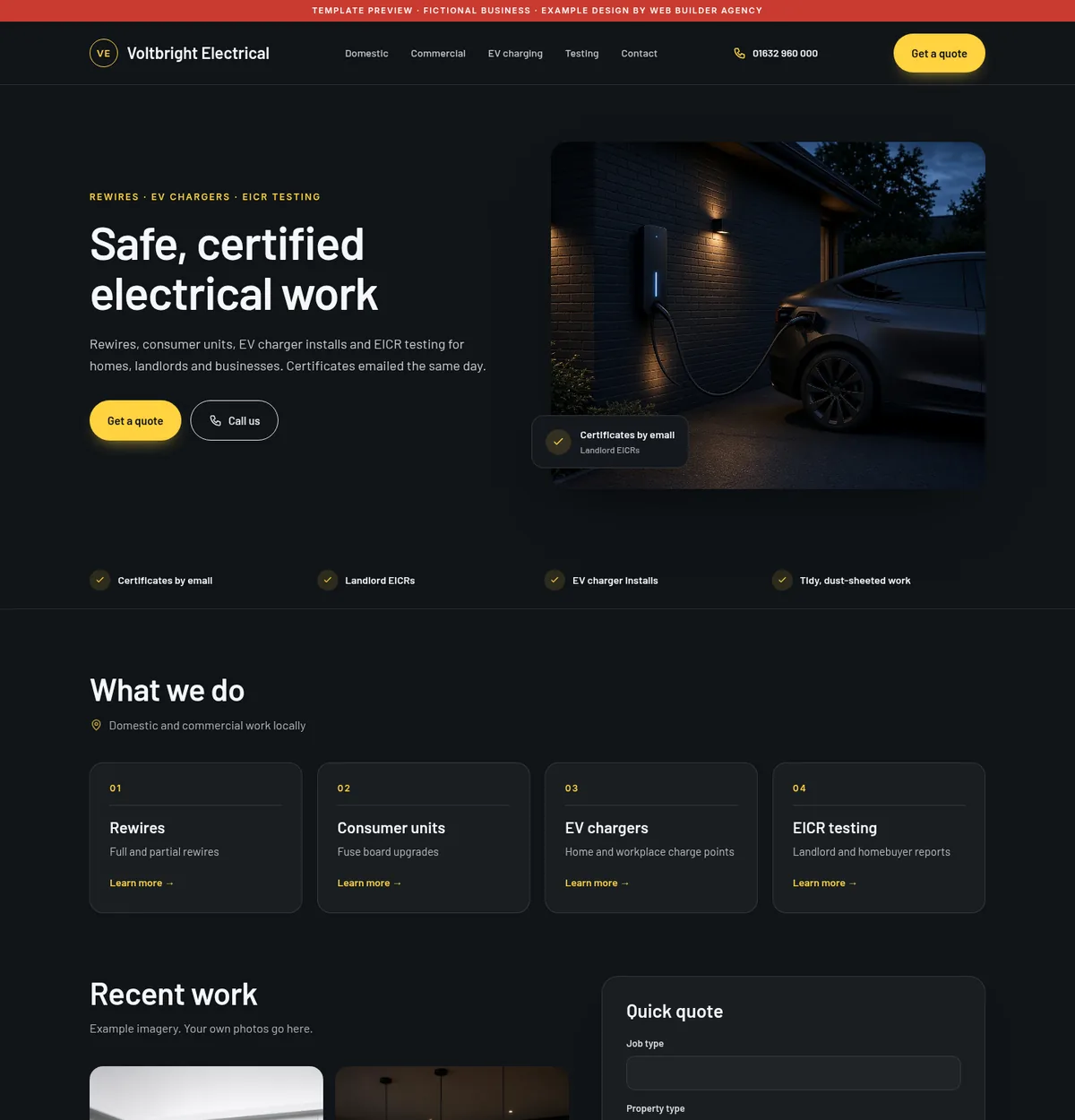
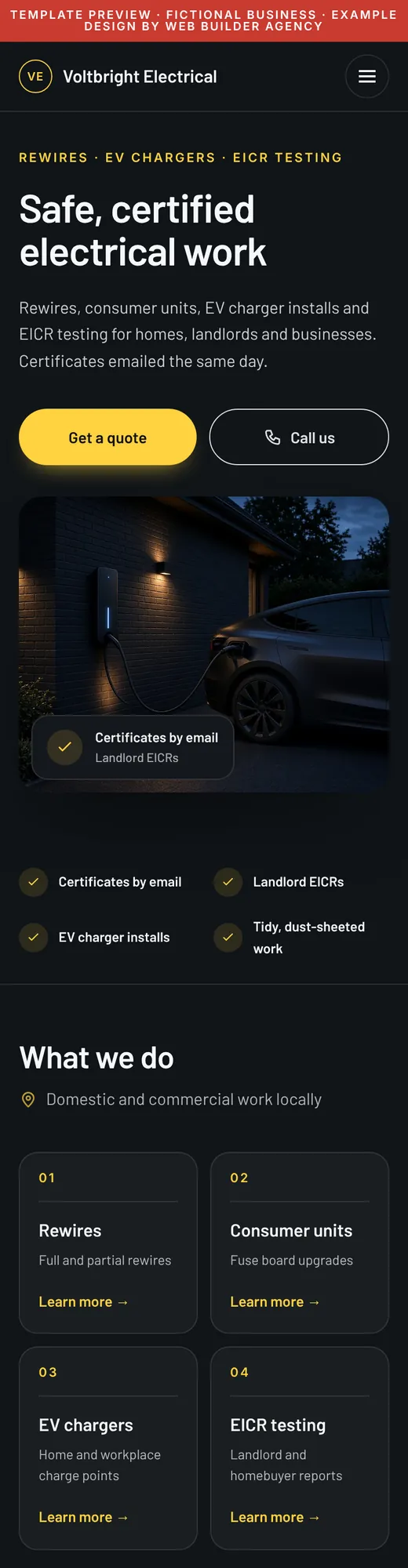
- Quote button and phone number in the header
- Homeowner, landlord and commercial routes
- Room for scheme logos linked to the register
- Registration numbers, prices and reviews are placeholders
03 / Must-have features
Features for an electrical contractor website
Planned around the three customer types most electricians serve.
Audience-led navigation
Clear routes for homeowners, landlords and commercial clients from the home page, each with relevant services and calls to action.
High-value service pages
Rewires, consumer unit upgrades, EV charger installation, lighting and testing, each explained step by step.
EICR booking for landlords
A booking form that captures the property address, tenant access arrangements and the date the current report expires.
Certificate explainer
A plain page explaining which certificate the customer will receive and why they should keep it.
Commercial capability
Sectors you work in, out-of-hours working and the paperwork you provide business clients, such as risk assessments and method statements.
Job photos with context
Neat boards, lighting schemes and installs, each with a line on what the job involved.
04 / Part P and schemes
Part P, schemes and landlord rules
Electrical work in homes is covered by Building Regulations, so customers benefit when you explain how compliance works.
- In England, Part P makes some domestic electrical work notifiable, including a new circuit, replacing a consumer unit, and additions or alterations to circuits in special locations such as bathrooms. Installers registered with a competent person scheme can self-certify this work. IET: Part P
- Government-approved schemes for electrical work in homes include NICEIC (Certsure) and NAPIT. If you are registered, show the logo with a link to your entry and explain that customers receive a Building Regulations compliance certificate. GOV.UK competent person schemes
- Homeowners can look up registered installers on the Electrical Competent Person register, so linking to your listing removes doubt.
- In England, private landlords must have the electrical installation inspected and tested at least every five years and give the report to tenants. A landlord page explaining this, with booking, is valuable. GOV.UK landlord guidance
- Booking forms collect tenant and property details, so they need a privacy notice under UK GDPR and should only ask for what you need.
We only show scheme logos and numbers you provide and confirm are current.
05 / Local SEO
Local SEO for electricians
Most electricians work within a set area, and many searches include a town name or “near me”.
- Use Electrician as your primary Google Business Profile category, with secondary categories such as Electrical installation service or Lighting contractor if they fit your work.
- Create a page for each major service rather than one long list, and link each to relevant job photos.
- Ask landlords and commercial clients for reviews as well as homeowners, since they search differently and value different things. Never offer incentives. Google review policy
- Keep your business name and phone number identical on your site, profile and scheme listings.
See local SEO for ongoing support.
06 / Checklist
What a good electrician’s website includes
Use this when planning or reviewing your site.
- Clear routes for homeowners, landlords and businesses
- Scheme membership with a link to your public listing
- An explanation of Part P certificates
- A landlord EICR page with booking
- Pages for rewires, consumer units, EV chargers and lighting
- A quote form for job type, property type and timescale
- Commercial capability and the paperwork you provide
- Recent reviews and job photos
- A fast, accessible build that works well on phones
07 / Cost
What an electrician’s website typically costs
How our packages usually fit an electrical business.
Essential, from £1,000
One page for a sole trader: services, scheme membership, areas covered and a quote form.
Business, from £2,500
Separate homeowner, landlord and commercial sections, service pages and EICR booking.
Bespoke, custom quote
For contractors needing an EV charger survey form with photo upload, or integration with job management software.
Final pricing is agreed in writing before work begins.
Every site we build is checked on real phones before launch, because that is where most of your customers will see it. See website design or SEO.
Questions
Electricians: common website questions
Should I show my NICEIC or NAPIT membership?
Yes, if you are registered. Link the logo to your entry on the scheme’s register or the Electrical Competent Person register, so customers can confirm it in seconds.
Do landlords really need an EICR?
In England, private landlords must have the electrical installation inspected and tested at least every five years and give the report to tenants. A dedicated landlord page with booking helps you win that recurring work.
Should I have a page for EV charger installation?
If you want more of that work, yes. A dedicated page can explain the survey, what the customer needs at home and how to request a quote, which also helps it appear in searches.
Can I separate domestic and commercial work on one site?
Yes. We build separate sections with their own service pages and calls to action, so a homeowner and a facilities manager each see what matters to them.
What should my quote form ask?
Usually the job type, property type, rough age of the wiring if known, preferred dates and a photo of the consumer unit. That lets you price more accurately before visiting.
A better website
starts with a conversation
Book a £99 SEO audit
Let's discuss your next website
Send us your business name, a brief description of what you'd like to achieve, and your preferred budget, and we'll be in touch soon.