

HomeWebsites for dentists
Websites for dentists
Websites for dentists and dental practices
New patients compare practices on a phone, often while in pain or nervous about treatment. We design dental websites that are calm, clear about NHS and private care and quick to book from, with the regulatory details the GDC expects in the right places.
- NHS, mixed or private status made clear
- Online booking linked to your practice software
- GDC details for every clinician named

01 / How patients choose
How patients choose a dental practice
Patients usually search for one of three things: a practice taking new patients nearby, an emergency appointment, or a specific treatment such as aligners or implants. Each needs a different page and a different next step.
Unclear NHS status
Patients often cannot tell whether a practice is accepting NHS patients, private only or mixed, and give up rather than call to ask.
Treatment pages that oversell
Glossy claims can mislead and fall foul of advertising rules. Patients want to know what happens, how long it takes and what it costs.
Hidden booking
If booking means phoning during surgery hours, patients who search in the evening go elsewhere.
02 / Example design
Template preview: Brightmoor Dental Studio
Brightmoor Dental Studio does not exist. We invented it to show how a practice homepage can lead with booking, treatments and reassurance for nervous patients.
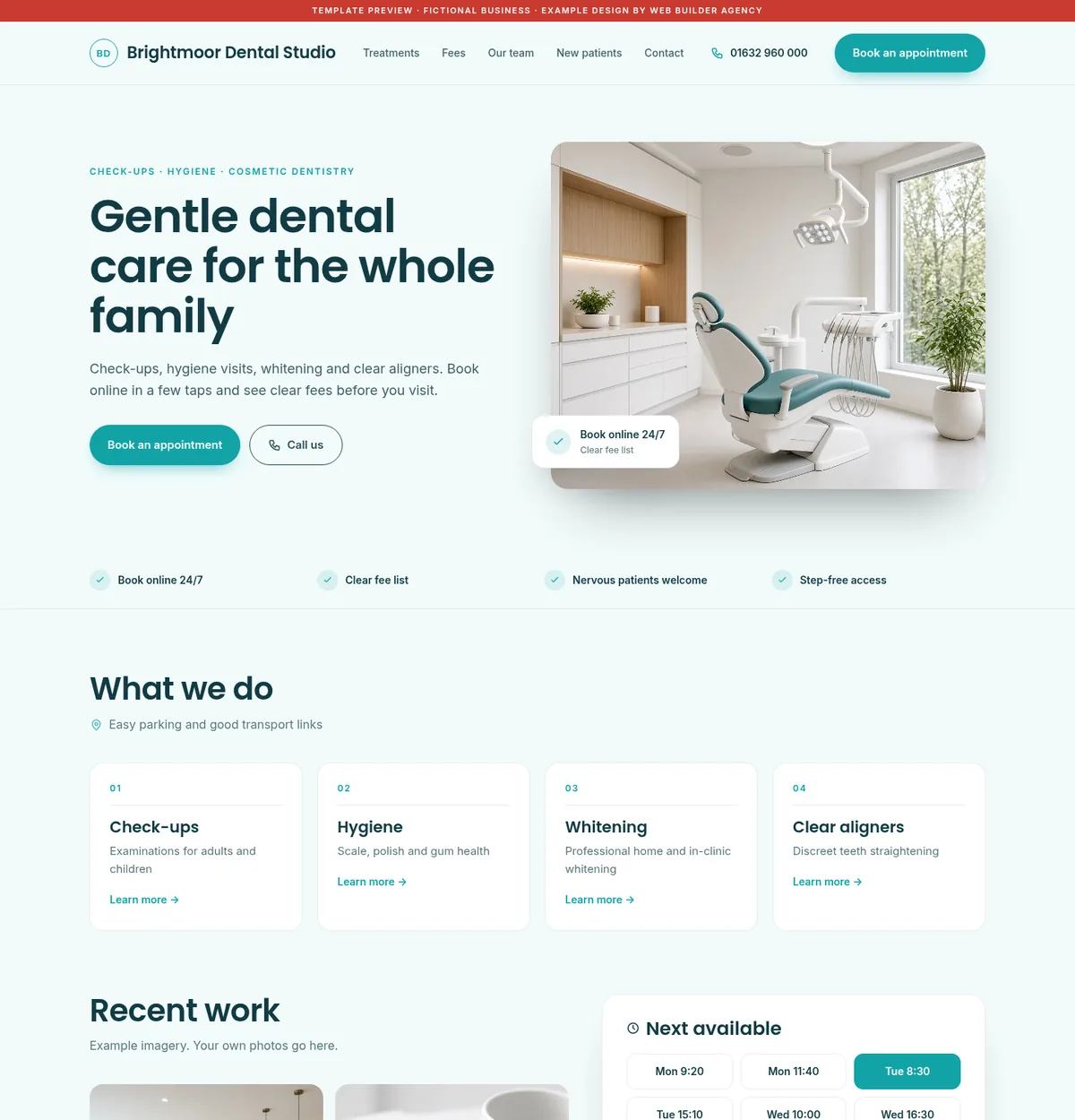
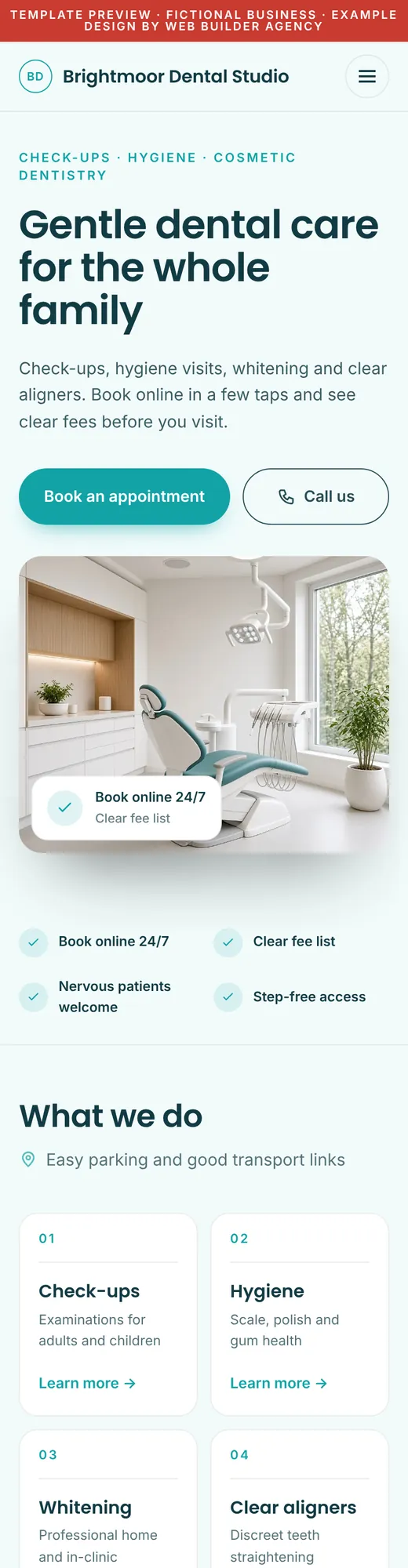
- Book-online button and phone number up front
- Treatments and fees one tap away
- Room for GDC numbers and complaints information
- Names, fees and reviews are placeholders
03 / Must-have features
Features a dental practice website needs
Planned around the questions new and existing patients ask most.
Online booking
Link or embed your practice booking system for check-ups, hygiene and consultations, with emergency slots kept separate.
Fee guide
NHS charges and private fees in a clear table that your team can update easily.
Treatment explainers
Plain-English pages on hygiene, fillings, whitening, implants and aligners: what to expect, aftercare and costs.
Team pages with GDC details
Each dentist and dental care professional with their qualification, country of qualification and GDC number.
New patient journey
Registration information, forms, medical history and what happens at a first visit, all in one place.
Nervous patient and access information
Sedation options if you offer them, step-free access, parking and quieter appointment times.
04 / GDC, CQC and ASA
GDC, CQC and advertising rules
Dental websites carry more required information than most. These are the points we design around.
- The GDC expects practice websites to show the practice name and geographic address, email and phone contact details, a link to the GDC, the complaints procedure and who patients can contact if not satisfied (the relevant NHS body for NHS care, the Dental Complaints Service for private care), and the date the site was last updated. GDC guidance on advertising
- Every dental professional named on the site needs their professional qualification, the country it was obtained in and their GDC registration number. Only dentists on a GDC specialist list may be described as specialists.
- The GDC also expects practices to make clear whether they are NHS, mixed or wholly private.
- In England, practices providing regulated dental activities register with the CQC, which does not give overall ratings to primary dental services, so avoid implying a rating that does not exist. Wales, Scotland and Northern Ireland have their own regulators. CQC: services we have not rated
- Your website counts as advertising under the CAP Code. Botulinum toxin is a prescription-only medicine and must not be advertised to the public, so facial aesthetics pages should promote a consultation instead. ASA guidance
- Medical history and registration forms collect health data, which is special category data under UK GDPR and needs extra safeguards. ICO guidance
Your practice remains responsible for its regulatory content; we give it a clear, easy-to-update home.
05 / Local SEO
Local SEO for dental practices
Most patients choose a practice near home or work, so your Google Business Profile matters as much as the website.
- Use Dentist or Dental clinic as the primary category, adding narrower categories such as Cosmetic dentist or Emergency dental service only where they reflect what you offer.
- Keep opening hours, emergency arrangements and whether you are accepting NHS patients accurate on both the profile and the site.
- Ask every patient for feedback in the same way, for example by text after an appointment. Do not offer discounts for reviews or only ask patients you expect to be happy. Google review policy
- Give each treatment its own page, so it can be found for searches such as “dental implants” plus your town.
See local SEO for ongoing help.
06 / Checklist
What a good dental practice website includes
Use this to check your current site.
- NHS, mixed or private status visible on the home page
- Online booking and emergency contact details
- A clear, easily updated fee guide
- GDC numbers, qualifications and countries for every clinician named
- Complaints procedure with NHS body and Dental Complaints Service details
- A link to the GDC and the date the site was last updated
- Balanced treatment pages without unjustified claims
- New patient forms with a privacy notice
- Access, parking and nervous patient information
07 / Cost
What a dental website typically costs
How our packages usually fit a practice.
Essential, from £1,000
A single page for a small practice: services, fees, team with GDC details, booking link and complaints information.
Business, from £2,500
Treatment pages, a fee guide, team profiles, new patient information and online booking.
Bespoke, custom quote
For multi-site groups or practices needing integrated forms, finance calculators or a patient portal.
Final pricing is agreed in writing before work begins. Fee lists can be kept current on an optional care plan from £99 a month.
We design calm, accessible pages and test them on real phones, so anxious patients find what they need quickly. See website design.
Questions
Dentists: common website questions
What information must a dental practice website show?
The GDC expects the practice name and address, contact details, a link to the GDC, the complaints procedure with NHS and Dental Complaints Service contacts, the date the site was last updated, and the qualification, country of qualification and GDC number of every dental professional named.
Can we call our implant dentist a specialist?
Only dentists on one of the GDC’s specialist lists can be described as specialists, and implant dentistry does not have a specialist list. Describe experience and training factually instead.
Can you connect our existing booking system?
In most cases, yes. We link or embed the booking system your practice already uses. Software fees from your booking provider are separate.
Can we advertise anti-wrinkle injections?
Botulinum toxin is prescription-only and cannot be advertised to the public. Your site can promote a consultation for facial aesthetics, worded in line with the ASA’s guidance.
Should before and after photos go on the website?
They can, if they are genuine, representative, used with patient consent and not edited in a misleading way. Avoid suggesting every patient will get the same result.
A better website
starts with a conversation
Book a £99 SEO audit
Let's discuss your next website
Send us your business name, a brief description of what you'd like to achieve, and your preferred budget, and we'll be in touch soon.